
Matias Huhtala: 20 years in banking, leading to successful business financing in the Baltics
This year Matias Huhtala, Head of Baltic Banking, celebrates his 20th anniversary at OP Corporate Bank. He led the opening of the bank’s branches in the Baltics and has since been responsible for the successful operation of these units.
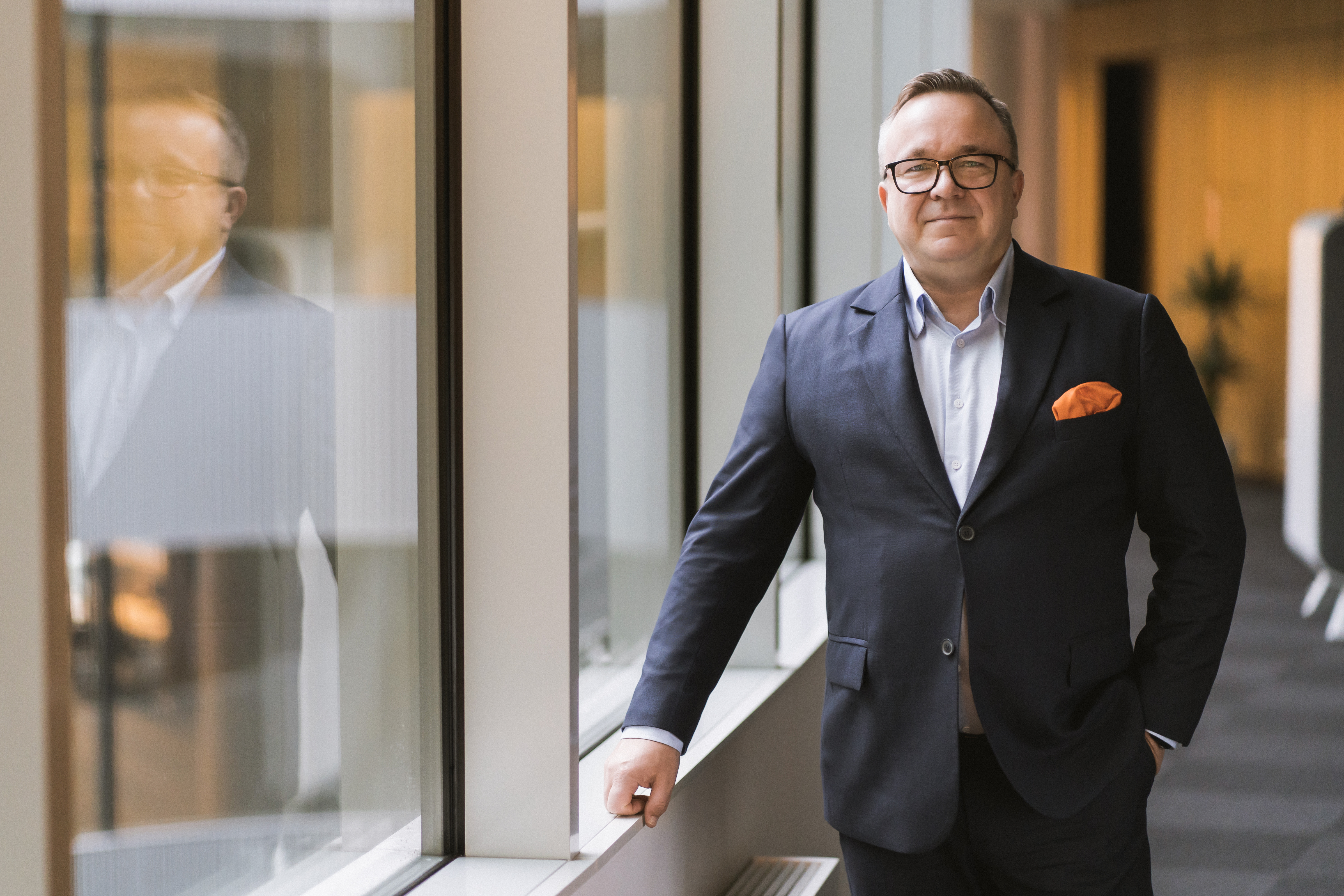
Matias lives between four countries – Lithuania, Latvia, Estonia, and Finland. He travels weekly and still actively participates in client meetings, supporting local teams in growing the financing portfolio and enhancing customer experience at our bank.
We invite you to read an interview with Matias, where he talks about how his career at OP started, whether he has managed to understand the business specifics in the Baltics, and what are the main challenges that banks currently face.
How have the past 20 years at OP Bank been for you?
Fast [laughs]. Although the years have flown by, I still remember my first day and the feelings I had when I joined OP Bank – I hoped for professional growth opportunities and interesting projects. I believe the bank provided me with all the chances to succeed. During this time, I’ve met many wonderful people, talented businesspeople, and leaders, and we’ve built strong, sustainable relationships with our bank’s clients and team.
You’ve held several positions during this time, what do you find most appealing about working in banking?
I started in the bank as a relationship manager, working with around 50 large and medium-sized businesses. I already had experience in this type of work, so when I joined OP, I was highly motivated to learn something new, meet clients, and get to know their needs in depth.
I’m glad the bank gave me the opportunity to work in very diverse roles. I’ve changed positions several times, but I still believe that being a relationship manager is one of the best jobs in the bank, as it allows you to get close to businesses, establish relationships, and gain a better understanding of their specific industries.
What fascinates and motivates me the most, though sometimes it gives me a headache, is the bank’s multicultural environment. One of the greatest pleasures for me is working with different people from various countries, learning about their cultures, traveling across different countries, and understanding their business specifics, which vary from country to country. Many people assume that all the Baltic States are the same, but the people and business practices in Latvia, Lithuania, and Estonia are quite different.
More than a decade ago, you led the opening of the bank's branches in Latvia and other Baltic countries – what was this experience like?
In 2011, I took responsibility for the bank’s expansion in the Baltic States – our team’s goal was to open branches in Latvia, Lithuania, and Estonia. It was a fascinating period because no one had done this in the bank’s history. In 2011, the branch in Estonia started operations, followed by Latvia the next year, and Lithuania in 2013. For some time, I also served as the Country Manager of the Lithuanian branch.
We began conducting banking operations, reporting to central banks, joined banking associations, built relationships with clients, and started financing their businesses – doing everything expected from a corporate bank.
In 2015, I got an opportunity to become the Head of Baltic Banking. I’m pleased to see that over the past decade, together with the team we’ve earned the trust of large and medium-sized businesses across the Baltics, expanded our client base, daily operations, and team. At the same time, the branch's turnover and profits have grown. The experience in these diverse markets has given me plenty of opportunities to develop as a leader.
How have you managed to understand the specific business practices in Latvia, Lithuania, and Estonia?
Currently, our bank’s total commitments in the Baltic States amount to EUR 4.6 billion and our loan portfolio stands at EUR 2.6 billion – this is how much we’ve lent to businesses, contributing to the economies of these three countries.
I’ve been working in the Baltics for thirteen years, but I’m still discovering new things about the cultural and business management differences. People in these countries can view the same situations very differently. One of the recent challenges was when we merged OP Finance’s leasing companies with the bank’s branches in the Baltics. Again, we were the first to carry out such a restructuring, and we had to complete the merger within eight months in three different countries – a very short time for such a process, but we succeeded.
Of course, client meetings are the key to understanding the specifics of businesses in Lithuania, Latvia, and Estonia. I spend about a week each month in Finland, Estonia, Latvia, and Lithuania. During these visits, I engage with our bank’s teams, meet with clients, look for common solutions for our long-term cooperation, and delve into the specifics and challenges of their businesses. These meetings highlight the cultural differences between the countries and companies – something you don’t notice when traveling but becomes evident when working with people.
What are the main challenges facing banks today, and how are you addressing them?
Banks have a significant responsibility to lead Europe’s green transition. Our research shows that businesses across the Baltics expect this from us – systematic support and unity among financial institutions in helping companies report on sustainability and meet the required standards. We need to be, and are, a few steps ahead in sustainability, actively investing in these competencies.
Due to the geopolitical situation, businesses in the Baltic States have become more cautious, but recovering economies are encouraging companies to think more actively about investment, expansion, and transitioning to sustainable practices. We see this particularly in Lithuania, where companies feel more stable and are keen to invest in growth, automation, and green technologies.
We’re living in a time of uncertainty – for several years, we’ve been experiencing significant regulatory changes, and with them, the market is evolving, while a new generation of employees is coming in with their own habits and ways of thinking. I’ve been in the role of Head of Baltic Banking for ten years now, but it feels like I was doing a completely different job five years ago – the economic, business, and regulatory environments are changing rapidly.
OP Bank has many long-term employees, what do you think is the secret to this success?
The bank places great trust in its employees, helps them grow and develop, and offers various professional challenges – you just have to take advantage of them. There’s a constant dialogue with employees at the bank; they’re listened to, and if someone wants to change their position, management tries to make it happen within the bank because one of our bank’s core values is people.
Recently, OP Financial Group was recognised as the most attractive employer in Finland among business sector employees. Considering that the group employs 14,000 specialists, this shows that people feel good within the organisation.
I’m glad that many of my team members who were the first employees when we acquired leasing companies and started our operations in the Baltics are still with us.
You’re always seen at events with an orange pocket square in your jacket – it’s become your signature look. How many of those do you have in your wardrobe?
I have about five orange ones, but in total, I’ve got around 50, if not more. I used to wear orange ties, but in recent years I’ve switched to pocket squares. I’ll have to think about what other orange accessories I should obtain for the coming decades.