
Joona Widgrén: Oil Prices Could Start Falling in Summer
Forecasts of how severe the consequences of the conflict in the Middle East and a potential blockage of the Strait of Hormuz might be currently vary widely. However, Joona Widgrén, Senior Economist at Finland’s largest financial group OP Pohjola, told LETA news agency that he currently leans toward the view that the impact on the global economy will be relatively short-lived. Oil prices are also expected to decline already in summer. Nevertheless, until there is clarity on how the crisis will be resolved, all forecasts remain subject to change.
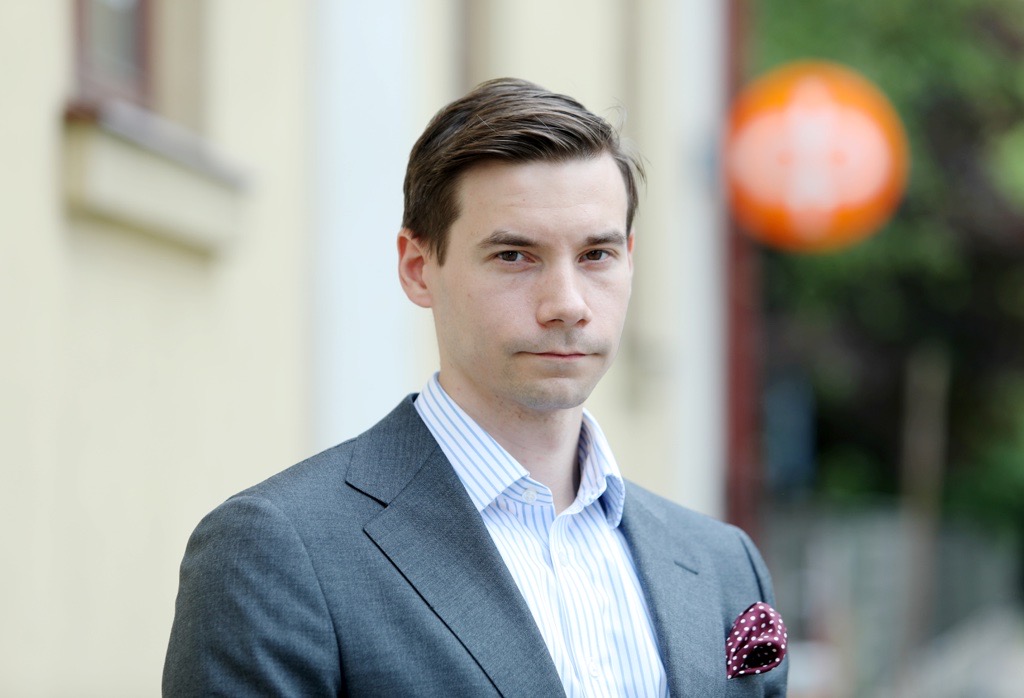
How would you describe the current situation in the Middle East and its impact on the global economy? Are we still looking at short-term instability, or are we already in a full-scale economic crisis?
Our current economic forecast suggests that the impact will be quite short-lived. We expect global GDP growth of around 2.8% this year—about 0.3–0.4 percentage points lower than our January forecast, but still not far from the long-term average of roughly 3%.
So, for now, we expect the effects of the war in the Middle East to be temporary. We also expect oil prices to start declining during the summer.
That said, the situation is highly uncertain. We currently do not know what oil prices will be or what kind of resolution will emerge. However, our baseline scenario is that the global economy will withstand this crisis relatively well.
Of course, the longer the current crisis in the Middle East continues, the worse the economic situation will become. If oil prices remain high until autumn, it is possible that the economies of many European countries will face some level of recession — oil prices will be high, there may also be higher interest rates, and overall lower economic activity for these reasons. But, as I mentioned, at the moment it is difficult to predict.
There are some factors that support the forecast that a peace agreement will be reached before the end of summer, as the United States most likely has ambitions to end this conflict at least before the midterm elections in November. However, if the conflict continues, the economic impact will, of course, be greater.
Our baseline forecast is that the largest impact will be felt this year. But if the situation continues longer, then it is more likely that the greatest impact will be seen next year, when we begin to observe higher inflation in other products as well, not only in the oil and petroleum products market, and the secondary effects of rising energy prices will appear, meaning that the prices of other goods, as well as wages, will start to increase. In that case, the impact on the economy would also be greater.
In such a case, the European Central Bank (ECB) will most likely also have to increase interest rates.
Can we nevertheless expect that even if peace negotiations are successful, there will be a longer-term impact on the economy, because the problem is not only the Strait of Hormuz, but also damaged oil and gas infrastructure in the Gulf countries?
Yes. From a macroeconomic point of view, it is difficult to assess how large this impact is and what the impact of other factors in this region is, but, of course, the war itself may not be the direct cause of high oil prices, whereas insufficient oil supply to the markets is. If infrastructure is damaged, then even if the war ends, but supply remains insufficient, then, of course, the impact will be higher energy prices for a longer period and also higher inflation.
However, in that case, in my opinion, another source of impact on the economy is overall sentiment. If peace is achieved, then this sentiment could improve, and therefore the overall impact on the economy will most likely be smaller even in a situation where supply remains insufficient.
You already mentioned that there may be secondary effects on the prices of other goods. What goods are we talking about? Could these be, for example, heating prices in the next heating season, agricultural products?
The first impact will affect products that are energy-intensive, where energy is needed for the production of those goods or services, such as food, heating, and transportation. However, for now, we do not yet see this secondary impact. It will take some time. As we saw in 2022 and 2023, initially only energy prices increased, and after six to twelve months other prices also started to rise.
In my opinion, one of the main differences this time is that the ECB is quite alert, so this time it will try to act in a timely manner in order not to fall behind the price increase curve, attempting to manage inflation, which in this situation is probably a good thing.
Some economists have said that we can speak only about short-term effects if this crisis ended within two months. Now those two months have passed. Can we talk about any timeframe within which this conflict must end in order to avoid long-term effects?
It is very difficult to say. We have started to observe, particularly in Asia, that there is already a real shortage of oil products. This particularly concerns aviation fuel.
However, many economists expect that oil prices will decline in summer. If the conflict lasts longer than summer, then we will see much more of these secondary effects on prices. Then the impact on the economy will, of course, be much more severe than if the situation is resolved by summer. But, of course, with each week that this war continues, the impact on the economy will be greater. For example, there have already been reports that there is a real risk that even in Europe aviation fuel shortages may begin.
It is very difficult to say where the boundary lies between short-term impact and long-term or medium-term impact, but in my opinion, we can be quite certain that if the conflict continues beyond summer, the impact will be greater than currently forecast.
If we speak about Europe, are there any differences compared to 2022, when the war in Ukraine began? At that time, most did not foresee such a development, and many countries were highly dependent on Russian gas. Now liquefied natural gas (LNG) infrastructure is much more developed and supply is more diversified. Can we say that Europe is, in some way, better prepared for such geopolitical shifts?
For European countries, oil imports from Iran represent a much smaller share of the economy than energy from Russia, especially for Germany, which was, and in some respects still is, quite dependent on Russian energy resources. Therefore, the direct impact on Europe is smaller.
However, the main difference, in my opinion, is that many countries are to some extent prepared for this type of shock in energy supply. They have had time to consider other solutions, alternative ways of obtaining energy, and the range of sources from which they can import energy is broader than before Russia’s invasion of Ukraine. Therefore, in this respect, I believe it may be a smaller shock for Europe.
But on a global scale, this is quite a large shock, because the Strait of Hormuz is very important for global oil supply, so oil prices worldwide are changing quite significantly.
Many countries are currently responding to this situation by reducing fuel taxes. How adequate are these measures, and can they affect inflation?
Of course, they help households and make their lives easier. However, in my opinion, the overall economic justification for these steps is not very strong, because by lowering the price, you increase demand for products whose supply is lower than before. Therefore, it may turn out that the effect of these measures could actually increase prices and affect inflation. This is one of the reasons why, for example, Finland has not implemented any of these support mechanisms regarding fuel prices so far.
But, of course, households need support, so if this situation is temporary and supply is restored, then these measures can be considered acceptable, but at the same time it should be remembered that they may also contribute to price increases, contrary to what is intended.
Do you see that there are things governments can still do to reduce the impact on households, especially less wealthy households?
Precisely targeted measures are almost the only way to achieve this, especially in the short term. Of course, in the long term we already see that in those European economies that are less dependent on oil, where the range of energy sources is broader and there are alternatives to oil and gas products, this also helps households in situations where the prices of one or two energy products rise sharply. But in the short term, in my opinion, precisely targeted measures are almost the only way to help households, especially poorer households.
During periods of geopolitical tension, energy has traditionally been a weak point for the Baltic states. How significant is the risk for our region, and have we done enough since 2022?
In the Baltic states, in recent history, the energy component has always been significant in driving inflation, and increases in energy prices largely contribute to inflation in the Baltics. This means that the impact of such situations on economies that are highly dependent on energy products, especially oil and gas, will be greater.
There have been improvements in the Baltic states, as well as in most European economies, but in my opinion, the overall situation remains quite similar. The Baltic states are still relatively dependent on energy resources, and energy has a greater impact on inflation in the Baltics than in many other European countries. At the same time, the situation is fairly similar in Germany, which is also quite dependent on energy consumption, especially in the industrial sector. The same applies to a number of Central European countries.
At the same time, after 2022, in the Baltics—especially in Latvia and Estonia—the share of industry in GDP has decreased.
Which is not a good thing.
Of course, it would be better if the manufacturing sector had already recovered.
Can we experience the same spike in inflation as after Russia’s invasion of Ukraine?
Of course, it is possible, but it is not our baseline scenario. One of the reasons is that the ECB will most likely be more alert and will act faster than it did in 2022. The overall economic situation is also not the same as after the pandemic years, when we saw rapid growth. In 2022, the shock from the disruption of energy supplies coincided with very high demand, and that was fertile ground for high inflation. Now the economic situation is much calmer, and therefore, in my opinion, it is unlikely that there will be as large an increase in inflation as in 2022. Of course, anything is possible, but it is not the baseline scenario.
You already mentioned the ECB. What is your forecast? What changes in their interest rate strategy could be expected?
Many commentators believe that in 2022 the ECB was late in raising interest rates, and that was one of the reasons for the high inflation at that time. Currently, the market expects that the ECB could raise rates two or even more times this year. That is quite a lot given the current situation, where the European economy is not in a very good state and inflation is still relatively low, although we know that there is an increased risk of inflation.
At present, it is quite likely that there may be at least one interest rate increase in summer. If afterwards inflation increases or high inflation expectations persist, then it is quite possible that further rate hikes will follow. However, it is equally possible that financial markets are currently pricing in too many rate increases for this year.
European Commission officials have indicated that there is a risk of stagflation in Europe, where inflation is high but economic growth is low. Do you also think this could happen?
If energy prices continue to remain high, then stagflation is possible. However, it should again be noted that this is not the baseline scenario. We, as well as most other experts, still expect that inflation will start to decline and that GDP will begin to grow again next year.
But, of course, if the situation does not change and oil prices remain very high, and especially if these secondary effects occur, then stagflation is also possible. Particularly in some countries where growth is already quite low.
How do the Baltic states look in this respect? The situation in Lithuania is somewhat better, but, for example, in Estonia and Latvia GDP growth has also not yet been at the level we would like to see.
We expect that Estonia and Latvia will have positive growth this year, with slightly faster growth than last year. This is mainly due to stronger domestic demand and partly also because defence spending and higher government investment are currently having some impact.
The financial situation of households in all Baltic states can in fact be considered quite good. Nominal wages have grown quite well, and inflation, although elevated, is lower than wage growth, so real wages have increased. Thus, households should have the ability to increase their spending this year and next year. Of course, higher inflation will now eat into part of the purchasing power or real wage growth, but at least for now we believe there is still room to improve the situation through private consumption as well as investment.
However, as I mentioned, the Baltic states are still quite dependent on energy and gas products, so the risk of lower economic growth in these countries is slightly higher. Historically, economic growth in the Baltic states has also been more volatile than, for example, in Sweden or Finland, where growth has been somewhat more stable.
Nevertheless, the baseline scenario still assumes that the Baltic economies will grow. Not very rapidly, but they will grow.
It is clear that the current situation affects some sectors more heavily, but are there sectors that could also benefit, for example, the defence sector?
Yes, of course, the overall situation to some extent supports the defence sector, as most European countries are increasing their defence spending and production volume. Many countries want to purchase European defence systems from European defence companies. Therefore, overall, this geopolitical situation supports companies in the defence sector.
At the same time, as we have seen in the short term, oil refining companies have seen increased profits as oil prices rise. However, demand is also likely to decrease if the economic situation worsens.
Therefore, the defence sector may be the one that benefits the most from the overall geopolitical situation and the increase in defence spending.
This is already the third crisis after the pandemic and the war in Ukraine that the economy is experiencing almost without pause. To what extent have companies and the economy as a whole adapted to operating under such conditions?
Overall, I am even somewhat surprised at how well economies have coped with all these crises or shocks over the past five or six years, because after COVID-19 there have been quite a number of different shocks and crises. In general, if we look at the European economy, the labour market is still quite tight, and there have not been any major recessions, although, of course, growth rates in Europe have been quite low, but that may also be a structural problem. In particular, we have observed very low growth in Germany, which, of course, affects all of Europe. In fact, it is quite surprising how well economies have coped with these problems.
Has geopolitical uncertainty become a new normal in our lives?
To some extent, yes. But let’s hope that this changes fairly quickly. But for now, in my opinion, it is a kind of new normal. The rise of globalisation up until around 2010 has shifted into an era of geopolitical shocks.
How does this Middle East crisis affect investor attitudes towards the Baltic states, given that the war in Ukraine has also not ended?
That again depends on how long this situation continues. It may be more related to overall investor sentiment, and, of course, during crises many investors move away from smaller economies and focus on investments in larger economies that are considered safer.
But overall, in my opinion, it depends on how long this situation continues, and I think that currently there are no significant signs indicating that investors are withdrawing money from smaller economies such as the Baltic states.
Do you see that such conflicts accelerate structural changes, for example in energy independence or regional cooperation, for instance in the Nordic region, as we can no longer rely so much on distant markets?
Yes, possibly. At least after the 2022 surge in energy prices, we saw that European countries began focusing on energy independence and started cooperating with other European countries. So this is a kind of risk management in such situations, to reduce the risk of shocks. As many countries have already been trying to reduce their oil consumption, this could somewhat accelerate that process.
Author: Inguna Ukenābele, LETA News Agency