
Finnish Economist: Latvia’s Economy Started the Year on a Positive Note, but Risks to Growth Remain
Although Latvia’s economic growth will continue, geopolitical uncertainty and the conflict in the Middle East have reduced the pace of economic recovery and will hinder the expected decline in inflation, forecasts Joona Widgrén, Senior Economist at the Finnish financial group OP Pohjola. According to the expert, recent developments in the Middle East conflict will have a positive impact on global economic forecasts, but not to such an extent that the latest calculations would change significantly. The main driver of the Latvian and Baltic economies will continue to be domestic demand, supported by private and public consumption.
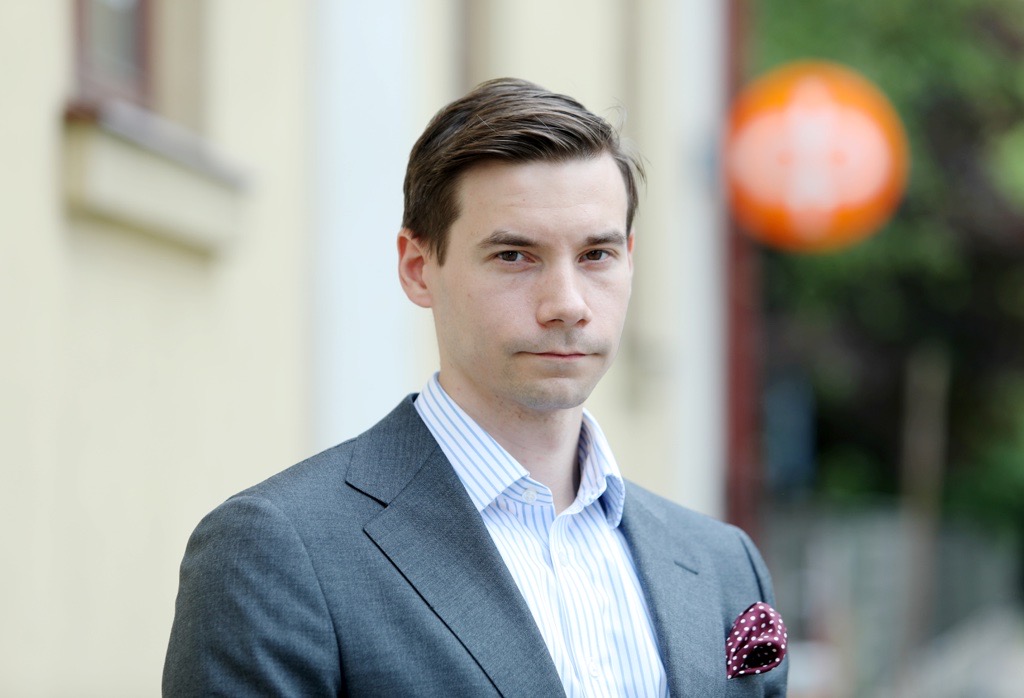
“In the first quarter, Latvia’s economic performance was better than expected; however, geopolitical developments in recent months and persistently high oil prices have worsened the economic outlook. This is particularly evident in consumer sentiment and inflation forecasts, which have had to be revised upward,” notes Joona Widgrén, Senior Economist at Finland’s leading financial group OP Pohjola, adding that a positive agreement between the US and Iran could improve the global economic situation in the coming months.
Commenting on recent developments in the Middle East, the economist points out that macroeconomic forecasts were initially based on the assumption of a gradual decline in oil prices during the summer months. Therefore, the current price dynamics do not significantly change the previously developed forecasts. As the economist notes, oil reserves will need to be replenished, which will continue to sustain globally higher oil demand than before the conflict in the Middle East for some time.
Latvia’s Economic Recovery Continues, but Growth Will Be Slow Due to External Risks
At the beginning of this year, Latvia’s economy demonstrated stable growth. GDP increased by 2.5% in the first quarter compared to the same period last year, and growth was mainly driven by investments and private consumption. The contribution of net exports to the economy remained negative, as imports grew faster than exports.
According to OP Pohjola’s economist’s forecasts, Latvia’s economy will grow by 2.0% this year, while growth could reach 3% in 2027. Economic development will continue to be supported by domestic demand, including private and public consumption, as well as fiscal policy and increasing investments in defense.
Pressure on energy prices caused by the Middle East conflict has become a significant risk for both Latvia’s and the entire European economy. Even if oil prices continue to decline in the coming months, the reduction in inflation may be slower than previously expected, as the impact of rising energy prices has already begun to spread to other goods and service groups. OP Pohjola’s economist forecasts that inflation in Latvia will reach 4% this year and could decline to 2.5% next year.
One of the most visible consequences of the Middle East conflict in the Baltics is the deterioration of consumer sentiment. Higher inflation and increasing uncertainty have reduced household optimism across all Baltic states, including Latvia. However, the overall financial situation of households remains stable, and in the long term, this creates good preconditions for the growth of private consumption.
“Although the geopolitical situation in the world is changing rapidly, Latvia’s economy demonstrates resilience to external shocks. The economy is gradually recovering, but growth is likely to remain moderate in the near future. Development continues to be supported by increasing domestic demand, investments, and fiscal policy. If a potential agreement to end the war in the Middle East and a decrease in oil prices remain stable, this could reduce pressure on inflation and gradually improve the cost environment for companies. However, if the geopolitical situation escalates again or volatility in energy markets continues, companies will have to face higher uncertainty and cost pressure in the future as well,” notes Elmārs Prikšāns, General Manager of OP Corporate Bank plc Latvia Branch.
Main Driver of Baltic Economies – Private Consumption
The main pillar of the Baltic economies remains private consumption and a stable labor market. At the same time, all economies in the region are increasingly feeling the effects of geopolitical risks and higher energy prices.
After a prolonged period of stagnation, Estonia’s economy is recovering more rapidly, and growth of 2.5% is forecast this year. Private consumption is supported by wage growth and tax changes; however, inflation will remain high.
In Lithuania, economic growth is becoming more moderate. The beginning of the year has been weaker than expected, and economic growth this year may be limited by both slower exports and a more challenging external environment. Nevertheless, private consumption and domestic demand will remain the main drivers of the economy, as elsewhere in the Baltics.
“There is still good potential for the recovery of private consumption in the Baltic states. Labor markets remain stable, household incomes are increasing, and this creates good preconditions for economic growth. However, in the coming quarters, economic development will be significantly determined by the development of geopolitical events and the resulting dynamics of energy prices,” explains J. Widgrén.
The Global Economy Has Absorbed the Energy Price Shock Relatively Successfully
Despite disruptions in the Middle East, the global economy continued to show moderate growth at the beginning of the year. According to the economist, the impact of the energy price shock on the global economy has so far been smaller than during previous major oil price shocks.
In recent days, global economic prospects have become slightly more positive due to an agreement between the US and Iran. Oil prices have already begun to decline, and economists predict that under favorable agreement conditions, they could gradually decrease further.
At the same time, inflation in the euro area remains elevated. The European Central Bank raised interest rates in June, responding to inflation risks. Market participants still expect the possibility of one or two additional rate hikes this year; however, an agreement in the Middle East could reduce these expectations.
“The global economy is growing, but uncertainty remains high. The main risks are still related to energy prices, their impact on inflation, and the geopolitical situation. If the agreement between the US and Iran proves durable, it could reduce pressure on energy prices and improve economic prospects both globally and in Europe and the Baltic states,” emphasizes J. Widgrén.
About OP Corporate Bank plc Latvia Branch
OP Corporate Bank plc is the central bank of OP Pohjola, Finland’s largest financial services provider. It began operations in Latvia in 2012 and is currently one of the leading banks in Latvia by the volume of loans issued to medium and large enterprises. OP Corporate Bank plc Latvia Branch provides financial services to leading companies in Latvia and plays a significant role in the long-term development of the country and the wider region.