
Finnish Economist: Faster Growth Expected in Latvia’s Economy in 2026, Driven by Private Consumption and Investment
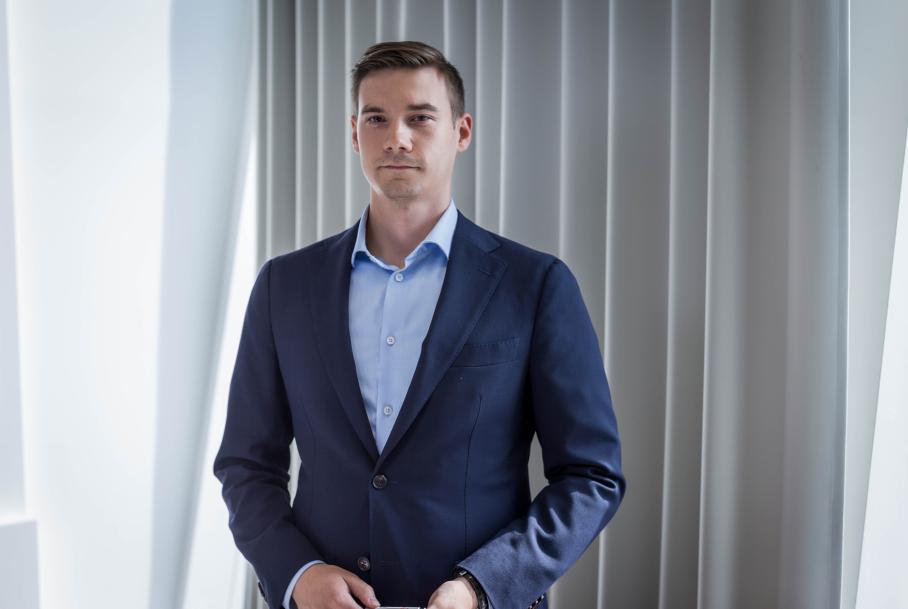
Latvia’s economy is expected to gain stronger momentum this year, reaching 2.8% GDP growth, according to Joona Widgrén, Senior Economist at Finland’s leading financial group OP Pohjola. According to the expert, economic growth will be primarily supported by rising private consumption and investment. Inflation is projected to decline to 3% and remain stable in 2027; however, escalating conflict in the Middle East and rising oil prices pose additional risks. If elevated price levels persist, inflation may turn out higher than currently forecasted.
Domestic Demand to Be the Main Driver of Latvia’s Economic Growth
At the end of last year, Latvia’s economy showed a clear recovery, even exceeding expectations. The economist notes that this positive trend is set to continue in 2026, with GDP growth accelerating compared to last year, reaching 2.8%, and continuing to rise in 2027 as well. While economic growth in previous years was largely driven by public investment, this year it will be underpinned by private consumption, supported by rising net wages, improved household purchasing power, and a recovery in consumer confidence.
Forecasts indicate that inflation in Latvia will decline, reaching around 3% in 2026 and remaining at a similar level in 2027. Overall, price growth is stabilising, although it remains above the euro area’s long‑term target.
No major fluctuations are expected in the labour market, and unemployment remains the lowest among the Baltic states. Latvia’s manufacturing sector continues its gradual recovery, with moderate growth in industry expected to persist.
The impact of the Middle East conflict on Latvia’s economy is not yet fully predictable. However, if oil prices remain high for an extended period, this—similarly to other parts of the world—will affect inflation indicators, with initial effects likely to become visible already in the coming months.
“Our economists’ forecasts show that Latvia’s economic recovery will continue this year. Government investment in infrastructure and public spending on defence will provide a solid foundation for a new economic growth cycle. Despite the complex geopolitical environment, broader growth is expected across the Baltics, creating a favourable environment for businesses as well,” says Elmārs Prikšāns, General Manager of OP Corporate Bank plc Latvian branch.
Broader Growth and Inflation Stabilisation in the Baltic Region
Economic recovery is evident across all Baltic states, with growth primarily driven by strong domestic demand.
The fastest economic growth is expected in Estonia, where a prolonged economic downturn came to an end last year. GDP growth of 3.2% is forecast for Estonia this year, while inflation is expected to decline from 4.8% last year to 3%. A faster recovery in Finland’s economy is also expected to have a positive impact on Estonia’s GDP by supporting export growth.
Lithuania is expected to maintain stable growth momentum, supported by strong exports, with GDP growth of 3% (close to last year’s 2.9%) and a slight decline in inflation. Overall, inflation across the Baltic states is expected to stabilise at around 3% (Latvia and Estonia at 3%, Lithuania at 3.1%). Manufacturing activity is expected to recover in both Latvia and Estonia, while growth in Lithuania’s manufacturing sector is projected to remain broadly unchanged.
“This year, we will see more resilient and broader‑based growth in the Baltic economies, with Estonia recovering the fastest. Despite still relatively high inflation, wage growth and a stable labour market will support private consumption, which will be a key component of economic growth across the Baltics. Fiscal policy, including rising defence spending, will continue to stimulate economic activity in the region,” explains J. Widgrén.
Moderate but Stable Growth in the Global Economy
The outlook for the global economy improved in mid‑2025, with growth indicators rising slightly above previous expectations. Forecasts suggest that global economic growth will remain around 3% in the coming years. Despite disruptions in international trade relations, global trade growth has remained strong, although it is expected to moderate slightly this year compared to last year.
No significant changes in monetary policy are anticipated. The European Central Bank is currently keeping its key interest rate unchanged, and it is expected to remain within the 2–2.5% range over this and next year. In the longer term, interest rates are projected to stay within the 2–3% range. Overall, this points to a more stable financial environment and reduced uncertainty regarding borrowing costs.
“The global economy is currently in a phase of moderate but stable growth. The main sources of uncertainty remain trade policy and geopolitical risks. While recent U.S. tariff changes may not have a direct and significant impact on Europe, the prevailing uncertainty itself has a negative effect by undermining business confidence,” emphasises J. Widgrén.
Commenting on the Middle East conflict and the resulting rise in oil prices, the economist notes that such developments contribute to ongoing global economic uncertainty.
“The scale of the conflict’s impact will depend on its duration and how long oil prices remain elevated. If oil prices stay at current levels or continue to rise, the effects of this conflict on the global, Baltic, and Latvian economies could become visible already in the coming months, most directly reflected in higher inflation,”
explains J. Widgrén.
About OP Corporate Bank plc Latvian Branch
OP Corporate Bank plc is the central bank of OP Pohjola, Finland’s largest financial services provider. The bank began operations in Latvia in 2012 and is currently one of the leading banks in Latvia by the volume of loans issued to medium‑sized and large enterprises. OP Corporate Bank plc Latvian branch provides financial services to leading companies in Latvia and plays a significant role in the long‑term development of the country and the wider region.