
A balance between caution and courage: how Baltic entrepreneurs forge development plans
The challenges of recent years – from high interest rates to geopolitical fluctuations – have become the new reality of business, forcing entrepreneurs to assess strategic decisions and growth potential much more carefully. However, the latest OP Corporate Bank plc client survey data* reveals an optimistic picture: instead of remaining in a wait‑and‑see mode, Baltic entrepreneurs are purposefully planning their next stage of growth.
A shift in plans across the Baltic states
A slight divergence is currently visible in the sentiment among Baltic neighbours – entrepreneurs in Latvia and Lithuania feel significantly more confident about expansion than their counterparts in Estonia. This year, 85% of Latvian companies and 87% of Lithuanian companies plan to invest in business development, while in Estonia the figure stands at 74%. This confidence is most strongly rooted in the ability to compete globally – especially in the manufacturing sector, where export orders dictate the need for new capacities.
Estonia’s caution may be explained by its close ties to the Finnish market, which has recently experienced stagnation. As a result, our northern neighbours are currently focusing on safer anchors – public procurement and internal stability – while Latvia and Lithuania are more actively preparing the groundwork for export growth.
Investments in processes and technologies – one of the pillars of development
This year, companies will focus on long‑term investments and process optimisation. In a context of labour shortages, improving IT infrastructure is no longer a choice but a necessity for operational continuity. Automation will become the main driver for using existing resources as efficiently as possible and maintaining competitiveness.
At the same time, cybersecurity and sustainability (ESG) criteria are becoming fundamental to business. Cybersecurity ensures business continuity by protecting the reputation built over decades from paralysing incidents. Meanwhile, a sustainability strategy has become a mandatory entry ticket to international supply chains and a prerequisite for obtaining financing – a crucial aspect for growth.
Development of digital solutions more topical in Latvia and Estonia
An interesting trend is emerging in Lithuania, where interest in developing digital solutions and e‑commerce is currently lower than in neighbouring countries. In Latvia, 53% of companies identify this direction as a target for expansion, and in Estonia 44%, while in Lithuania – only 10%. This may be linked to Lithuanian companies having a higher level of digital maturity and having already made substantial investments in digitalisation earlier, while now focusing on other development areas such as expanding production capacities or logistics.
Timely decision‑making is crucial
Uncertainty in the business environment will persist, and expansion is always associated with risks – rapid demand fluctuations in export markets, challenges entering new markets, availability of skilled labour, and geopolitical factors can significantly impact growth plans. At the same time, long‑term growth almost always follows demand – companies that invest today in building production capacity, developing new products, and strengthening employee competencies will be better prepared when market activity increases.
Positive momentum can also be seen in the growing interest of foreign investors in the Baltic region – several significant transactions have recently been concluded in the manufacturing, forestry, and food sectors, confirming confidence in the region’s long‑term growth potential.
Baltic entrepreneurs’ expansion plans currently reflect thoughtful action rather than excessive optimism. Investments in digitalisation, sustainability, manufacturing, and new markets point to purposeful preparation for the next growth stage. Companies that are able to balance caution with timely decision‑making will, in the long run, be the driving force behind the development of the Baltic economies.
*The survey was conducted by the research agency Kantar in August and September 2025, interviewing representatives of 130 large and medium‑sized companies in all three Baltic States.
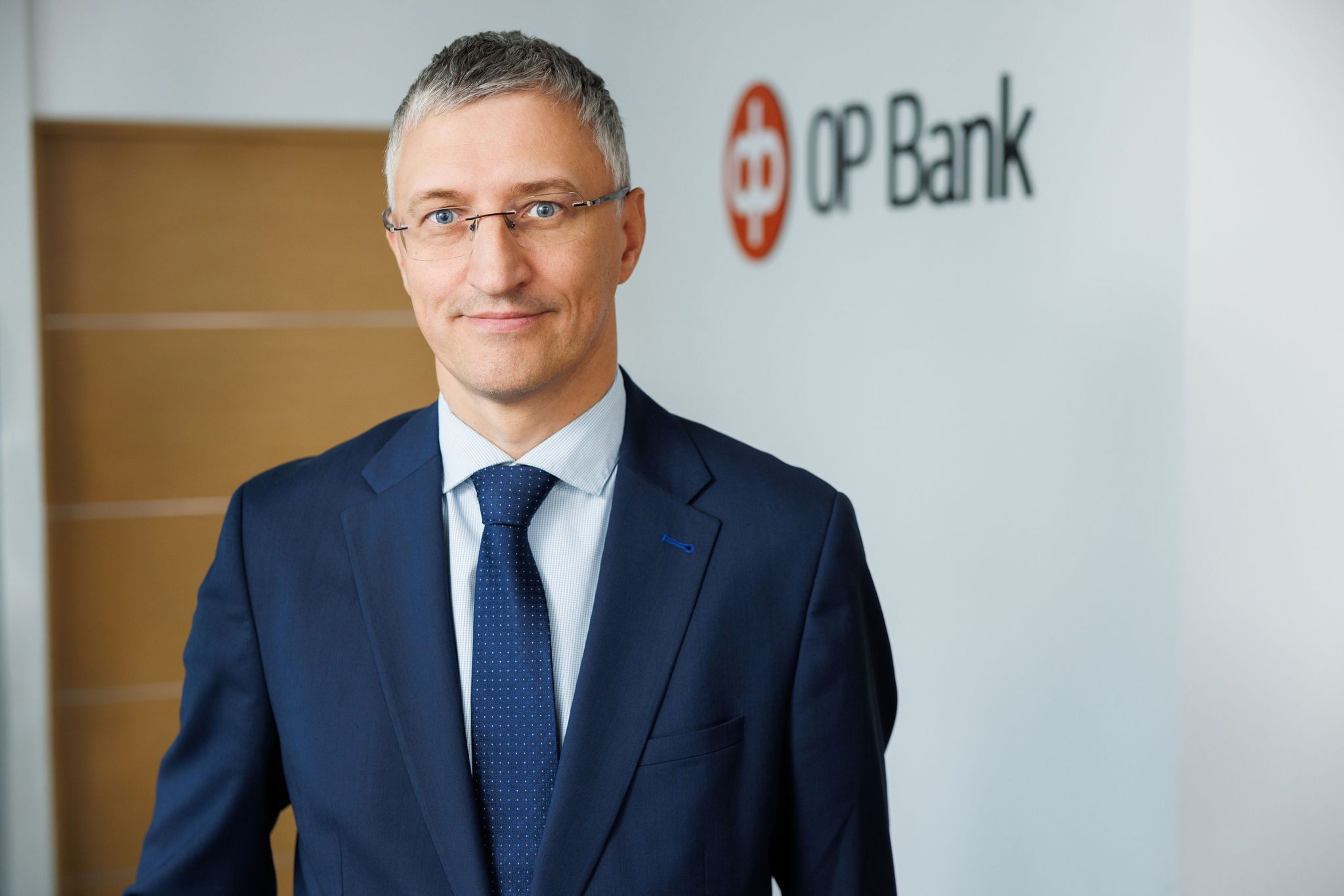
Mārtiņš Freibergs
Head of Baltic Credit Analysis at OP Corporate Bank plc Latvian branch