
Large and medium-sized companies will invest more in optimization and IT infrastructure next year
Most large and medium-sized companies in Latvia plan to invest in their development next year, primarily allocating additional budget to areas such as internal process optimization, IT infrastructure improvement, and employee training, according to data from an OP Corporate Bank plc customer survey*.
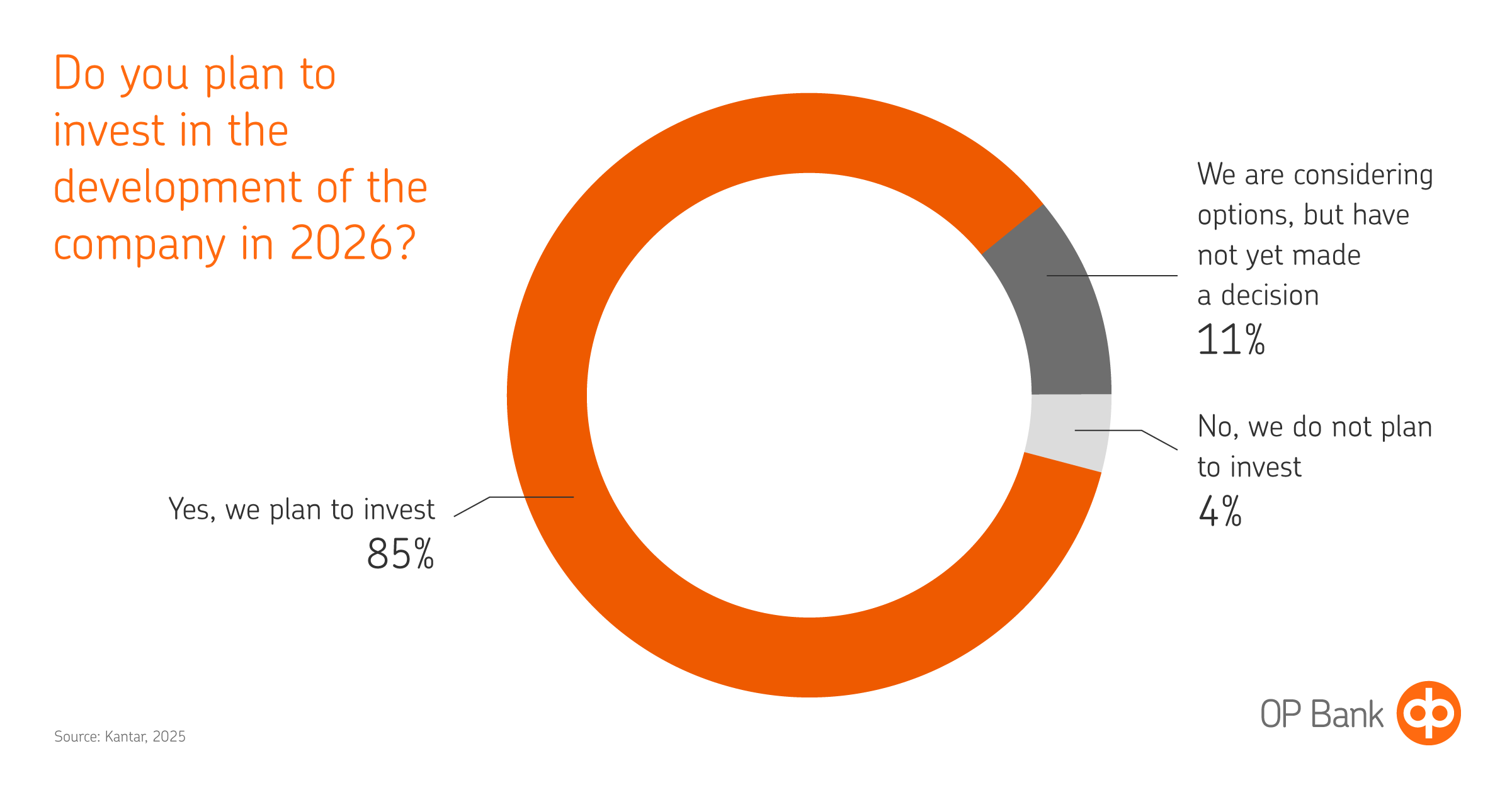
Looking ahead to 2026, 85% of Latvia’s large and medium-sized companies indicate they plan to invest in their business development, 11% are considering it but have not yet made a decision, while only 4% do not plan to invest in growth.
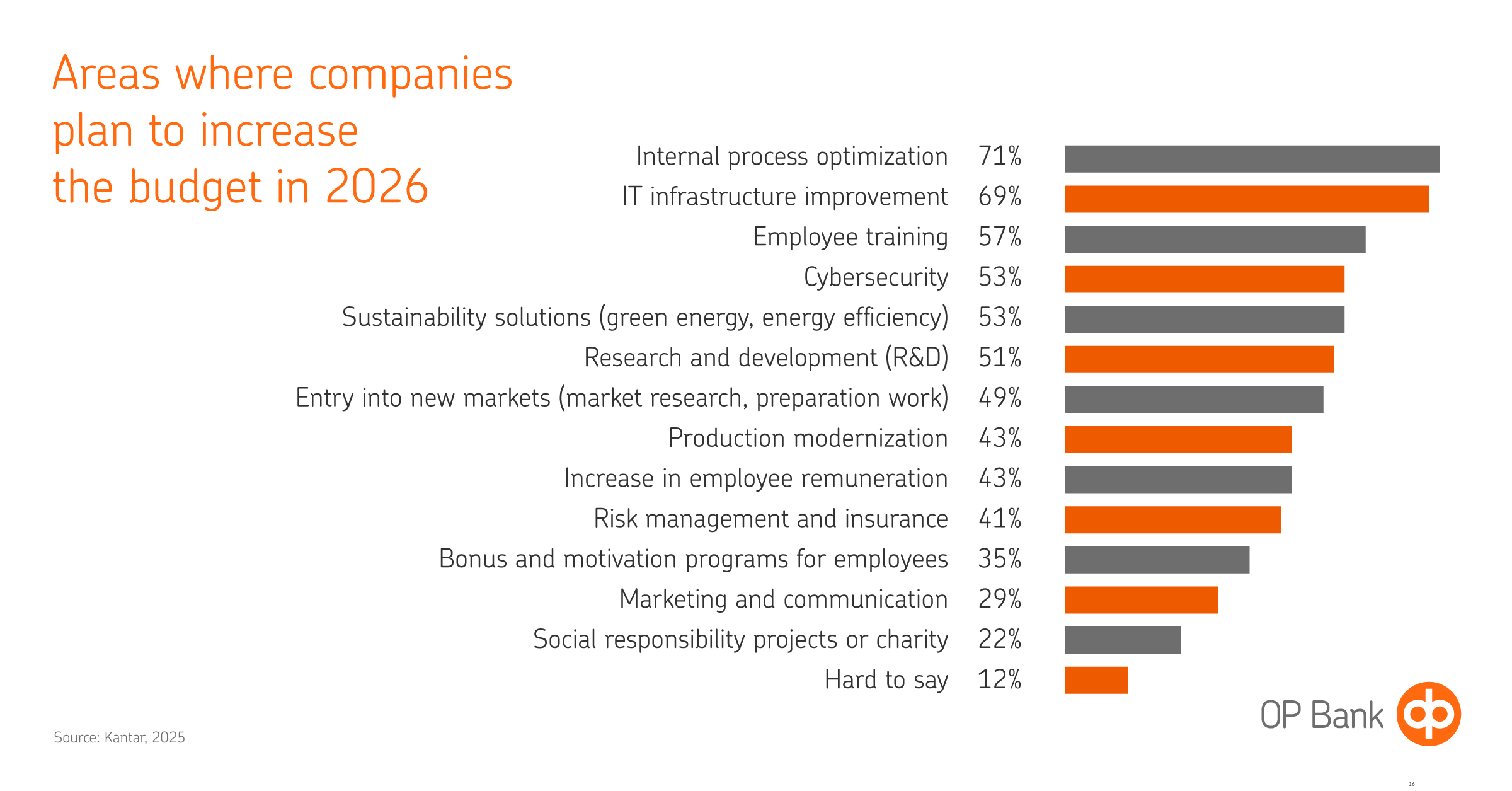
The areas Latvian entrepreneurs most want to develop are related to technology and operational efficiency – 71% of respondents stated they plan to invest more in optimizing internal processes, and 69% plan to improve IT infrastructure.
“The survey results show a positive outlook for Latvia’s large and medium-sized business segment – although 2025 has been full of unexpected twists in the global economy, our entrepreneurs have managed to maintain stability and continue investing in growth. Technology, and especially artificial intelligence, is becoming an integral part of everyday work. Investments in IT infrastructure and AI solutions are becoming critical prerequisites for competitiveness and sustainable growth. This trend is also visible globally – one of the leading U.S. research and consulting companies, Gartner¹, forecasts that global IT spending will increase by 9.8% next year, with a significant portion of this growth driven by AI infrastructure,” says Elmārs Prikšāns, General Manager of OP Corporate Bank plc Latvia branch.
More than half of companies plan to invest in workforce development
Survey data shows that 57% of Latvia’s medium and large companies will increase their budget for employee training, 43% will increase employee salaries, and slightly more than a third (35%) will invest in bonus and motivation programs for employees.
“For more than three years now, Latvia has had the lowest unemployment rate in the Baltics, which means companies must think more seriously about attracting and retaining talent. Investments in employee development are critically important because only in this way can we maintain competitiveness and ensure sustainable growth,” adds E. Prikšāns.
Alongside investments in employee development, companies plan to increase funding in other strategically important areas. For example, 53% of surveyed companies will invest in strengthening cybersecurity, and the same number will invest in sustainability solutions such as green energy or energy efficiency. Half (51%) will invest in research and development projects next year, 49% will increase the budget for entering new markets (market research, preparatory work), 43% will actively modernize their products, 41% will invest more in risk management and insurance, 29% will increase marketing and communication budgets, and 22% will allocate more funds to social responsibility or charity projects.
Neighboring countries’ priorities – technology and sustainability
In neighboring countries, most large and medium-sized companies also plan to invest in development – 87% in Lithuania and 74% in Estonia. Overall, priority areas are similar across the Baltic states, but data shows that Lithuanian companies more often plan to increase investments in IT infrastructure improvement (55%) and sustainability solutions (55%), while Estonian companies focus on technology – 71% will increase the budget for IT infrastructure improvement and 65% will invest in cybersecurity solutions.
Similar to Latvia, Estonian companies often think about employee development – half of the surveyed companies plan to increase investments in employee training. However, in Lithuania, this area is less relevant, with only a third (32%) of companies planning to invest more in employee training next year.
*The survey was conducted by the research agency Kantar in August and September 2025, interviewing representatives of 130 large and medium-sized companies in all three Baltic states.
¹ Source: Gartner.com