
Finnish economist forecasts 1% GDP growth and 5.3% inflation for Latvia this year
Latvia’s economy is developing at a cautious pace– in 2025, GDP could grow by 1% this year, with stronger growth expected in the coming years, according to Joona Widgrén, Senior Economist at Finland’s leading financial group OP Financial Group. Currently, recovery is being driven by industry and investment, while household consumption is expected to increase more significantly only next year. Inflation in Latvia could rise to 5.3% this year before stabilising again.
Industry and investments strengthen Latvia’s economy
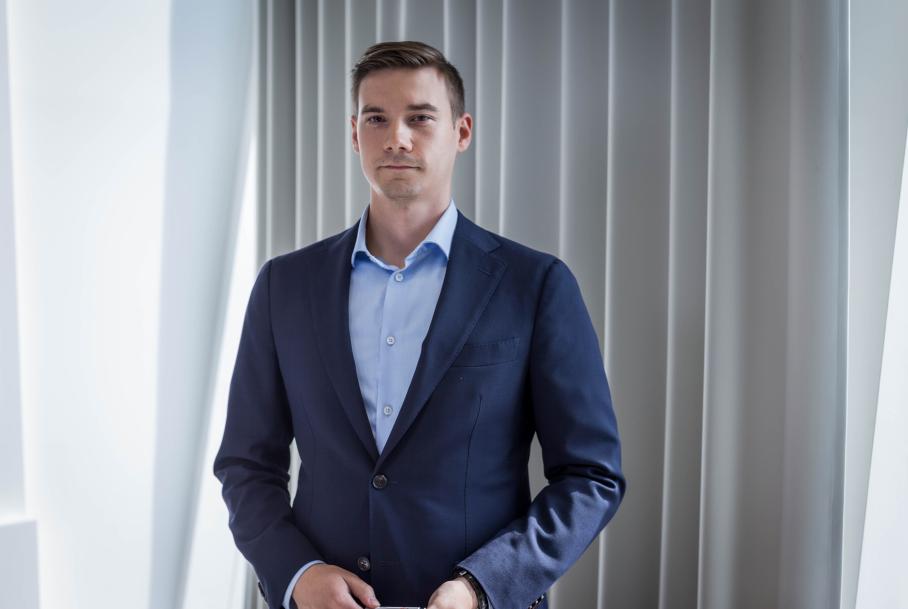
Economist Joona Widgrén notes: “Latvia’s economy is currently in a transitional phase – growth is slow, but several preconditions are gradually strengthening, which should allow for more rapid and sustainable growth next year. The export sector continues to grow, demonstrating its ability to adapt to global challenges and the burden of U.S. tariffs.”
Signs of recovery are gradually appearing in manufacturing, and it is expected that trade agreements and overall economic growth in the eurozone will further support these indicators in the future. Consumer confidence in Latvia has increased significantly and is now close to its usual level, but private consumption has not grown for more than a year. The labour market remains stable, with Latvia continuing to record the lowest unemployment rate in the Baltics.
Elmārs Prikšāns, General Manager of OP Corporate Bank plc Latvia branch adds: “We see that households remain cautious in their spending, but corporate and government investments, as well as export growth, give hope for more sustainable growth in the future. Latvia’s financial system is currently stable, and the banking sector is ready to support economic recovery with lending and other financial solutions.”
Lithuania continues to have the fastest growth in the Baltics
Assessing the development of the Baltic states, Widgrén highlights that Lithuania’s economy is growing the fastest – this year, GDP is expected to rise by 2.5% and by 3% next year. Growth in Lithuania is driven by strong investment activity and improved household purchasing power, and inflation remains lower than in Latvia. In Estonia, however, recovery is significantly slower – this year, GDP growth is expected at 1%, inflation – at 5.3%, and consumption there remains weak.
Uncertainty in global trade is decreasing
Currently, , the main growth driver in the global economy is the services sector, while only the first signs of recovery are visible in industry. Uncertainty in international trade has decreased, as the U.S. and its partners have reached agreements on lower tariffs than initially promised. The euro exchange rate against the dollar has stabilised.
“This summer, the European Central Bank reduced the base interest rate to 2% and kept it unchanged in July, thus concluding an almost year-long cycle of reductions. Monetary policy is now close to a neutral level, and if inflation remains around 2%, the ECB will not need to further cut rates. Therefore I expect that the end point of rate cuts has been reached or is at least close,” says Widgrén.
He concludes that overall, global growth in the coming years will be close to the average level, but for small and open economies such as the Baltic states, the development of external trade will be crucial.
About the Latvian branch of OP Corporate Bank plc
OP Corporate Bank plc is the central bank of OP Financial Group, Finland's largest financial services provider. It started its operations in Latvia in 2012 and is currently one of the largest banks in Latvia in terms of corporate loans. The Latvian branch of OP Corporate Bank plc provides financial services to leading companies in Latvia and plays an important role in the long-term development of the country and the region.