
Joona Widgren: Economic growth in the Baltic countries will begin to accelerate in the second half of this year and next year
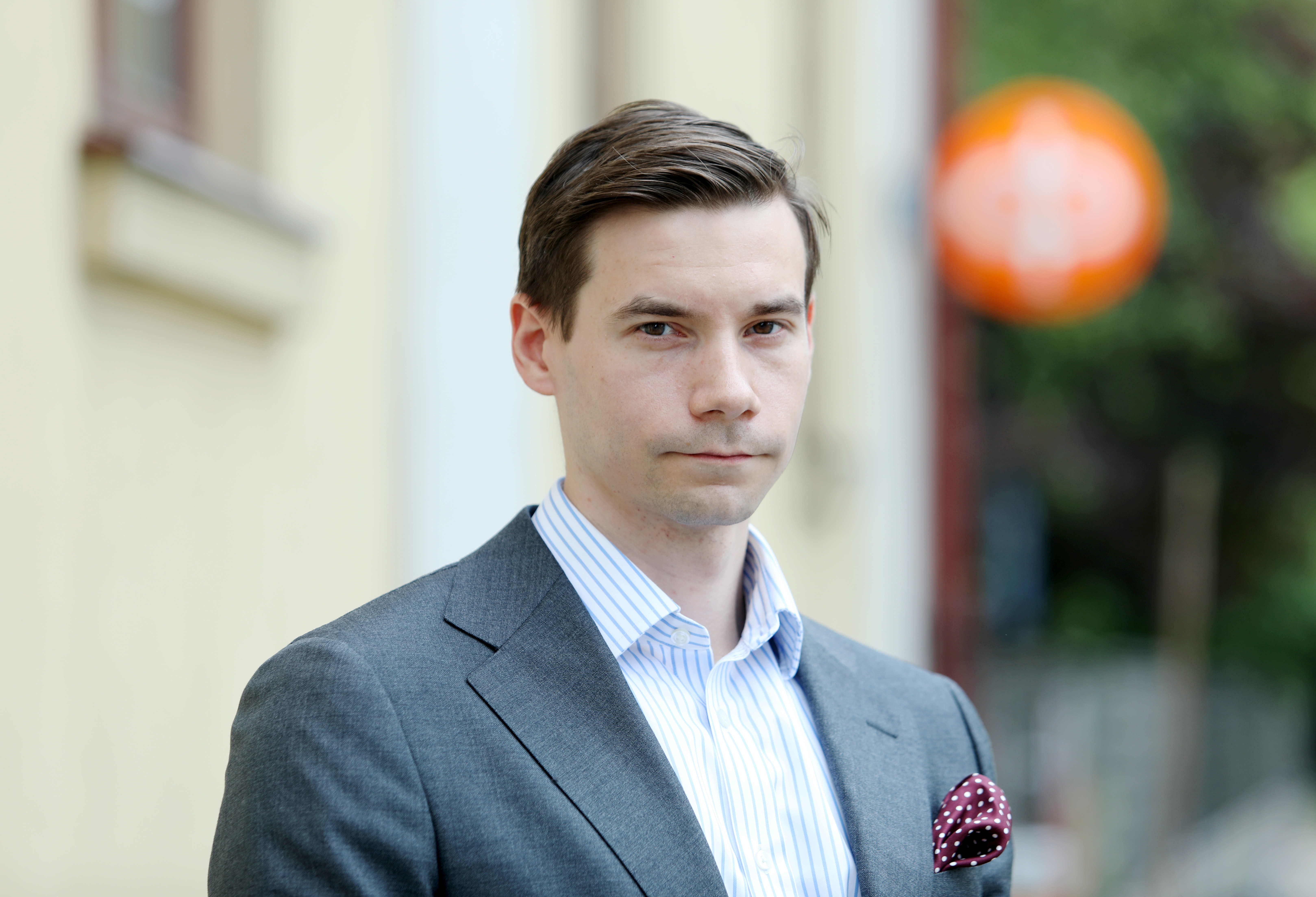
Is economy starting to recover in the Baltic States, Finland, and the euro area? How has the energy crisis affected us and what will happen to inflation and EURIBOR rates in the near future? OP Financial Group Senior Economist Joona Widgren (Joona Widgrén) shared his opinion on these and other topicalities in the interview with National information agency LETA.
After two years of war in Ukraine, how can we assess the impact of this conflict on our economies as Russia's border countries - both Finland and the Baltic states?
The impact has certainly been less than initially anticipated. At least in Finland, the impact has been rather limited, and the same can be said about the euro area in general.
Of course, the manufacturing sector in the Baltic States is quite energy-intensive, and therefore the energy crisis was quite severe in the Baltic States, much more severe than, for example, in Finland.
On the other hand, after the energy crisis and high inflation, it was much more difficult for Finland to live with high interest rates. It hit the construction industry and the Finnish housing market particularly hard.
Therefore, in my opinion, the impact in Finland and the Nordic countries in general has been quite different compared to the Baltic States, where, however, export to Russia and Belarus was lost, as well as Russian transit. Therefore, the impact has been both in the Baltic countries and in the Nordic countries, but it has been different.
What can be said about today? Have the Baltic countries coped with the effects of the war on their economy?
Now, the situation is much better and the economy in all the Baltic countries - especially in Latvia and Lithuania, but also in Estonia - is starting to recover. The manufacturing sector is starting to recover, and the purchasing power of households is also improving. There are many signs that the economy is getting healthy again and next year will probably be quite good in all the Baltic states and better in Finland, too.
I think that in Finland, considering the problems in the construction industry, it might take a little longer than in the Baltic countries. However, in general, the economic situation in Europe is improving. This is especially true of the manufacturing industry, which has been the weak link in this crisis. We expect production and exports to recover in the next year at least. Therefore, I think the situation looks better now than it did a year or three years ago.
If we talk about investors, then initially there was great concern that they would leave Russia's border countries and consider this region as too dangerous for investment. How would you describe the current situation?
Of course, this kind of geopolitical tension increases risk, and companies and investors take that into account. However, we do not see any data indicating that investors are leaving Finland or the Baltic States. So, yes, it's still a risk that's being assessed, but only a risk.
I don't think the geopolitical situation or being next to Russia is a major factor influencing investors. Rather, we should talk about the fact that the macroeconomic situation has been quite difficult. For example, in Finland, investment in the construction industry has decreased quite significantly, but this is more related to the construction industry itself than to geopolitical tensions.
In Latvia, we see very big problems in the transport sector, which has been closely connected with Russia and its transit. What is the Finnish experience?
Finland has never been as important transit hub for Russia as the Baltic states, so it has not been such a big challenge. Of course, we also had a transit flow from and to Russia, but it has not been so important for the Finnish economy. This sector has been much more important for the Baltic States. Finland's exports to Russia have dropped almost to zero since the start of the war. However, here I must say that the first wave of reduction was already visible after 2014, which can be considered as the beginning of the conflict. Finland's exports to Russia halved after 2014, and now the other half disappeared. Of course, it had some impact on the Finnish economy, but I wouldn't call it significant.
The conflict also had a great impact on energy. On the one hand, there was a refusal of Russian resources, on the other hand – much greater emphasis is now on renewable energy resources. How has Finland coped with it?
Of course, it also affected Finland, but I think Finland managed to deal with it quite well and it accelerated the transition to green resources because they just had to invest much more in the energy sector after the Russian invasion. At the same time, it must be said that Finland has never used as much coal or as much Russian gas in energy production as some other countries in Europe, so the consequences were much smaller. Of course, there was a negative impact, but it cannot be compared to the shock caused by the overnight stoppage of the flow of Russian energy resources in some parts of Europe.
No one knows how long this conflict will last or how it will end. What does this uncertainty mean for the economies of Finland and the Baltic states this year and in the near future?
Of course, this is a risk, but people and companies are already quite used to such a situation and have adapted to work in such conditions. Therefore, if geopolitical tensions do not increase in the future, confidence in the stability and growth of the economy will only strengthen, and it is not seen that this year or next year it will have a big negative impact. But of course, all these geopolitical tensions are still on the list of risks. If there is an escalation of the conflict or something unexpected, of course it will have a negative impact on the economy, but the so-called base scenario is that the economy will continue to function in the conditions as they are now.
The energy crisis caused by the war had a very big impact on inflation, especially in the Baltic countries, and even today the prices of many goods and services have remained quite high. Can this level of consumer prices cause problems in the long run?
Currently, inflation in both the Baltic States and Finland has already stabilized and is close to the target level set by European Central Bank (ECB) – 2%. If it stays like this, I don't think it will hurt the economy, but of course the loss of household purchasing power in recent years due to inflation has been quite significant. Therefore, it takes time for household purchasing power to return to the same level as before. Also, the nominal wage in Finland has not grown as fast as in the Baltic countries and it could be that now, when inflation is quite low, the purchasing power in the Baltic countries is improving quite rapidly, and in general this will support consumption and the economy in the near future. It might take a little longer in Finland.
Of course, there are goods and services whose prices have risen much faster. In Finland, for example, it is housing-related costs that have risen significantly, and this could be a bit of a problem, although so far there is no evidence that households are having much difficulty paying for housing-related expenses. In general, inflation has not caused major problems, households are used to price levels and purchasing power is improving.
So, you don't foresee deflation?
No, not really. Of course, that possibility exists, but if we look at wage growth, then I don't think there is much possibility of deflation. Of course, there may be a few months when consumer prices fall, but it is unlikely that we will see sustained deflation. The baseline scenario is that inflation will gradually stabilize at around 2%.
At the beginning of June, the ECB slightly reduced interest rates. Does this mean that we have dealt with inflation in the euro area?
The first rate cut does not mean that the ECB believes that the inflation problem is now solved. As ECB President Christine Lagarde said, everything depends on the economic data, and the ECB will keep following the data and will take decisions based on them also in the future. If inflation doesn't come down as the ECB expects, they can pause interest rate cuts, or if they see better numbers that mean we're getting closer to the target, they can cut interest rates faster.
I would not say that the inflation problem as such has been solved now, but we see signs that we are moving in the right direction, which is why the ECB was able to make the first decision to cut interest rates. Now, they will look at what happens next and how the economic data will change in the coming weeks and months, and then they will decide what to do next. Much attention will certainly be paid to how wages and demand change. The first rate cut has quite a small direct impact on the economy, it is more like a signal to the markets that we are starting to cut interest rates. However, of course, there is still uncertainty about how inflation will develop in the near future and, accordingly, how interest rates will change.
What impact will this have on banks and lending?
Markets currently expect the 12-month EURIBOR to be just above 3%, meaning the market expects two or three more rate cuts this year. However, we have already seen that market expectations can change quite quickly and quite significantly. A much more significant reduction was expected in the winter, and the 12-month EURIBOR rate was expected to be around 2‒2.5% by the end of the year. Over the past five to six months, these expectations have changed and there is much more uncertainty about future interest rates. It is clear that we will see a gradual decrease in interest rates.
Majority of home loans in Finland and the Baltic countries have variable rates, so they will change quite quickly when market interest rates fall. Perhaps the markets were a little over-optimistic about future interest rates over the winter and as a result some borrowers are now disappointed, but the important thing is how interest rates will change in the medium term, because in Finland, for example, the average mortgage loan term is about 20 years, so changes are more important in the medium term.
If we talk about the overall development of the economy, then in Latvia and Lithuania this year the gross domestic product (GDP) is expected to increase by up to 2%, in Estonia there could still be a decrease. Can we say that the economy is in a kind of stagnation phase?
We expect that economic growth in the Baltic States will begin to accelerate in the second half of this year and, of course, next year as well. But the development in the first half of the year is quite moderate, and thus the average growth of the whole year remains quite low, even still negative in Estonia.
One of the main reasons is that the Baltic States and Finland are quite export-oriented and export markets, especially in the euro area, are still growing relatively slowly. When export markets start to recover, production in Europe will start to increase, this will help our countries' exports and thus the whole economy. Of course, this will take some time. Households also need time to regain their purchasing power and start spending more. Consumer confidence indicators are already much better in Latvia and Lithuania, and they are also starting to improve in Estonia.
The Nordic countries are also very important export markets for the Baltic States. What are the predictions for the Nordic countries?
The dynamics are quite similar. We expect the second half of this year to be better in the Nordics. At the same time, in Finland we predict a slight decrease in GDP and then good growth next year. This, of course, will also support the Baltic countries afterwards.
In Finland the construction industry has a significant impact, as many Estonian companies and many Estonian residents also operate there. And currently, the Finnish construction industry is doing quite poorly, and this may have some impact on the Estonian economy. We also do not foresee a quick recovery in the Finnish construction industry, at least not this year. Most likely, it will do a little better next year, but we can hope for more significant growth only in 2026.
What is your assessment of the development of the European economy in general at this moment?
We expect modest growth this year and better growth next year. Of course, there are quite different stories in Europe. For example, German manufacturing industry has been in trouble. On the other hand, Southern European countries, whose economies are impacted by service sector and the tourism industry, received support from the European Union's recovery fund after the pandemic and are currently doing much better. This is why, for example, Italy's growth is currently good, but it is largely driven by public sector financing.
In general, the economies of the euro area are gradually recovering, but after the energy crisis and recession experienced in recent years, we still cannot talk about rapid growth.
Source: LETA